
How many Gucci stores are there in Brazil?
Seven: three in São Paulo, one in Rio, one in Brasília, one in Curitiba and one in Recife.
Map of Gucci stores in Brazil, with locations: seven official boutiques in São Paulo, Rio, Brasília, Curitiba and Recife.
Address list for this map. Click to go there.
Map of Gucci stores in Brazil, with locations: Haddock Lobo in Jardins, JK Iguatemi and Iguatemi Faria Lima in São Paulo, Village Mall in Barra da Tijuca, Iguatemi on Brasília’s Lago Norte, Pátio Batel in Curitiba and RioMar in Pina, Recife. Seven official boutiques.
There are three stores in São Paulo. Haddock Lobo 1626, at Cidade Jardim Shops, in Jardins, phone (11) 3199-0610, Monday to Saturday 10:00–22:00 and Sunday 14:00–20:00. JK Iguatemi, on Juscelino Kubitschek 2041, stores 140 and 141. Iguatemi on Faria Lima 2232, store C03A.
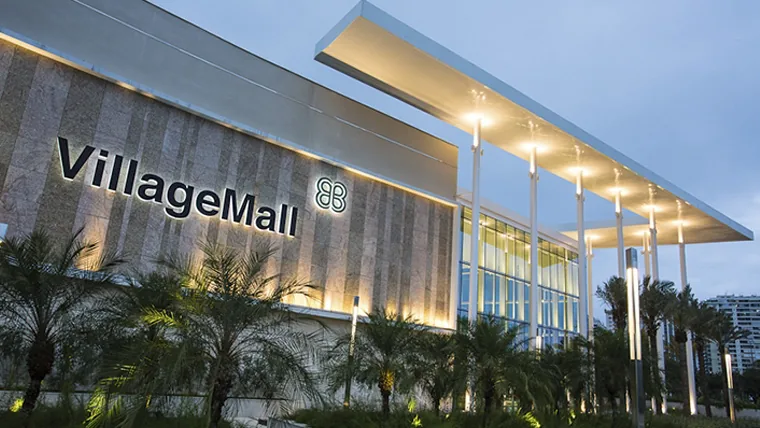
In Rio, Gucci is at Village Mall, Avenida das Américas 3900, stores 108 to 110, Barra da Tijuca. In Brasília, at Iguatemi Lago Norte, SHIN CA 4, stores 138 to 141. Curitiba, at Pátio Batel, Avenida do Batel 1868, stores 142 and 143. Recife, at RioMar, Avenida República do Líbano 251, in Pina.
7 listed

Rua Haddock Lobo, 1626 — Jardins

Av. Pres. Juscelino Kubitschek, 2041 — lojas 140/141

Av. Brigadeiro Faria Lima, 2232 — loja C03A
Av. das Américas, 3900 — lojas 108-110, Barra da Tijuca

SHIN CA 4, Bloco A — lojas 138-141, Lago Norte

Av. do Batel, 1868 — lojas 142-143

Av. República do Líbano, 251 — Pina
Seven: three in São Paulo, one in Rio, one in Brasília, one in Curitiba and one in Recife.
At Rua Haddock Lobo, 1626, Cidade Jardim Shops, in Jardins.
At Village Mall, in Barra da Tijuca, Avenida das Américas 3900, stores 108 to 110.
Italian house founded in Florence in 1921, known for leather, fashion, bags, shoes, jewelry, watches, fragrance and beauty.
Italian house founded in Florence in 1921, known for leather, fashion, bags, shoes, jewelry, watches, fragrance and beauty. Guccio Gucci opened the firm in Florence in 1921 with travel goods and leather. Florentine craft and equestrian references gave the house a base for international expansion. Later history includes family growth, crises, changes of control and very different creative periods; today the company belongs to Kering.
Horsebit, the green-red-green Web stripe, bamboo, the GG monogram, the loafer and the Jackie bag are lasting codes. Some took hold after the war; others were fixed by later creative directors. Visibility makes these signs recognizable and often copied.
Names most tied to the house include the Horsebit loafer, Jackie 1961, Bamboo 1947, Horsebit 1955 and the Double G belt. They do not share the same rarity, process or entry price; each line has to be checked in the live catalogue. Continuity of these products helps tell a house language from a passing trend.
Leather, GG canvas, molded bamboo, silk, metals and cloth appear by line. Bags and loafers need cutting, assembly and finish; perfume, glasses and watches follow other chains, including licenses in some categories.
The index reads craft as project, material, execution, quality control and service, without assuming every item gets the same handwork. Licensed lines and different scales have to be read apart. We do not assign a price, a lead time or availability without a current, specific source.
Heritage since 1921, craft in leather and fashion, relative exclusivity given the scale, a high-luxury price and distribution through boutiques and the official shop.
Loafer defined by hardware drawn from equestrian tack.
Curved bag tied to a historic house design.
Line whose bamboo handle became both structure and sign.
 Supanut Arunoprayote ·
